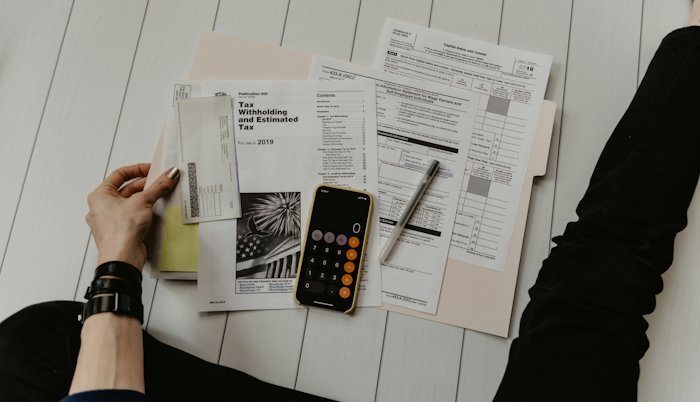
To know how to start investing, follow this order: pay off expensive debt, build an emergency fund, set goals and time frames, find out your investor profile, open an account with an authorized brokerage and start with safe fixed income, such as Tesouro Selic (Brazil’s floating-rate government bond) or a CDB (bank certificate of deposit) with daily liquidity. You can start with very little money.
- Before investing, get rid of expensive debt, such as revolving credit card balances and overdraft.
- Your first goal is an emergency fund, kept in something safe that can be withdrawn quickly.
- Tesouro Selic, daily-liquidity CDBs and LCI/LCA are the most common entry points.
- With the Selic (Brazil’s benchmark interest rate) at around 13.75% a year (October 2026), fixed income pays well with low risk.
- Consistency in your contributions matters more than the initial amount.
First things first: get your finances and debts in order
Investing starts outside the brokerage. The first step is knowing how much comes in, how much goes out and where the money goes every month. Without that map, any contribution becomes an effort you can’t sustain.
Write down your expenses for at least one month, separating fixed costs (rent, bills, school) from variable ones (delivery, leisure, shopping). Then set an amount to invest as soon as your paycheck arrives, not whatever is left over at the end of the month.
Expensive debt comes first
Revolving credit card balances and overdraft charge interest far above what any conservative investment yields. Keeping those debts while you invest means losing money on the difference.
The rule of thumb is simple: if the debt costs more than the investment yields, paying off the debt is the best “investment” available. If you can’t pay it all at once, try renegotiating by swapping the expensive debt for a cheaper one, such as a payroll-deductible loan or a secured loan.
Emergency fund: the foundation of everything
With your debts under control, the next goal is an emergency fund: money set aside for the unexpected, such as losing your job, car repairs or a medical bill. It keeps you from having to sell an investment at the wrong time or turn to expensive credit.
The most common benchmark is to save 3 to 6 months of your living expenses (up to 12 for self-employed people and those with variable income). This money needs safety and daily liquidity. See the full step-by-step guide on how to build your emergency fund.
Goals, time frames and investor profile
Every investment should have a purpose. “Making money” is too vague to guide your choices. “Saving R$ 20,000 for an apartment down payment in 3 years” is a goal that defines the time frame, the amount and the right type of investment.
Sort your goals by time frame
- Short term (up to 2 years): emergency fund, a trip, a new phone. Prioritize safety and liquidity.
- Medium term (2 to 5 years): a home down payment, a car, a course. Bonds with a set maturity date fit here.
- Long term (over 5 years): retirement, financial independence. This is where it makes sense to diversify and, depending on your profile, include variable income.
The time frame also matters because of taxes. In fixed income, IR (Brazilian income tax) follows a regressive table: 22.5% for withdrawals within 180 days, 20% from 181 to 360 days, 17.5% from 361 to 720 days and 15% after 720 days. The longer the money stays invested, the smaller the bite.
Find out your investor profile (suitability)
When you open an account, the brokerage will ask you to fill out a profile questionnaire, called suitability. It is required by CVM (Brazil’s securities regulator) rules and is used to indicate which products are compatible with your goals, knowledge and tolerance for losses.
The most common profiles are:
- Conservative: prioritizes safety and accepts little or no fluctuation.
- Moderate: accepts some fluctuation in part of the portfolio in pursuit of higher long-term returns.
- Aggressive: tolerates significant short-term drops in pursuit of bigger gains over long periods.
Answer honestly. Beginners without an emergency fund and without experience almost always fit the conservative profile, and that’s fine. Your profile can change over time.
How to choose a brokerage and open an account
The brokerage (or the digital bank with an investment platform) is the institution that gives you access to the products. Opening an account is usually free, done on your phone, with a photo ID and proof of address.
Safety: check the authorization and CNPJ
Before sending any money, check that the institution is authorized to operate. Brokerages and distributors are authorized by the Banco Central (Brazil’s central bank) and registered with the CVM. You can look up the name and CNPJ (Brazilian company registration number) on the official websites of the Banco Central and the CVM.
Another important point: your investments are registered under your CPF (Brazilian taxpayer ID), in systems such as B3 (Brazil’s stock exchange, for stocks, CDBs and listed funds) and the Tesouro Nacional (National Treasury) itself (government bonds). The brokerage is the intermediary, not the owner of your assets.
Costs you should compare
- Brokerage fee: charged per buy and sell order for stocks. Many brokerages have already dropped this fee to zero.
- Custody fee: on Tesouro Direto (the government’s retail bond program), B3 charges 0.20% a year. Tesouro Selic is exempt from this fee for investments of up to R$ 10,000.
- Product fees: funds charge a management fee and sometimes a performance fee. Compare before investing.
- Product shelf: check whether there is a variety of CDBs, LCIs and LCAs, plus access to Tesouro Direto.
First investments: where to invest for the first time
For beginners, fixed income is the natural path. In October 2026, the Selic is at around 13.75% a year and the CDI (interbank deposit rate) at around 13.65% a year, which makes conservative investments earn well above recent inflation, which was 4.22% over the 12 months through August.
Tesouro Selic
It is a government bond that tracks the Selic rate. It is backed by the Tesouro Nacional, considered the safest issuer in the country. It has daily liquidity and fluctuates very little, which is why it is often used for emergency funds.
The minimum investment is 1% of the bond’s price, subject to a floor of about R$ 30. Since the bond’s price changes over time, the minimum in practice ranges from about R$ 30 to R$ 200, depending on the bond. Learn the details in how Tesouro Direto works.
Daily-liquidity CDB
A CDB is a loan you make to a bank. Those that pay 100% of the CDI or more, with withdrawals at any time, are good alternatives to Tesouro Selic. They are covered by the FGC (Fundo Garantidor de Créditos, Brazil’s deposit insurance fund) up to R$ 250,000 per CPF per institution.
Choose CDBs that pay at least 100% of the CDI. Many accept small initial amounts, but the minimum varies by bank and platform.
LCI and LCA
LCIs and LCAs (real estate and agribusiness credit notes) are exempt from income tax for individuals in 2026 and are also covered by the FGC. That’s why an LCI paying 90% of the CDI can yield more, net, than a CDB paying 100% of the CDI.
The point to watch is liquidity: LCIs and LCAs have a minimum lock-up period, set by the rules of the Conselho Monetário Nacional (National Monetary Council), of several months. They are not suitable for an emergency fund. See the full comparison in CDB, LCI and LCA: what’s the difference.
Comparison table: investments for beginners
| Investment | Risk | Liquidity | Income tax | Guarantee | Approximate minimum |
|---|---|---|---|---|---|
| Tesouro Selic | Very low | Daily | Regressive table (22.5% to 15%) | Tesouro Nacional | About R$ 30 to R$ 200, depending on the bond’s price |
| Daily-liquidity CDB | Low | Daily | Regressive table (22.5% to 15%) | FGC up to R$ 250,000 per CPF and institution | Varies by bank; many accept small amounts |
| LCI / LCA | Low | After the lock-up period | Exempt for individuals | FGC up to R$ 250,000 per CPF and institution | Varies by issuer; usually higher than for CDBs |
| Poupança | Very low | Daily (yields on the monthly anniversary date) | Exempt | FGC up to R$ 250,000 per CPF and institution | No meaningful minimum |
Poupança (traditional savings account) appears in the table as a reference. With the Selic above 8.5%, it yields 0.5% a month plus the TR (reference rate), about 8.2% a year, below what Tesouro Selic and good CDBs deliver today, even after taxes.
How much to invest: can you invest with little money?
Yes. Investing with little money is entirely possible, and the habit matters more than the size of your first contribution. With R$ 50 or R$ 100 you can already buy a daily-liquidity CDB on most platforms, and Tesouro Selic usually requires less than R$ 200.
A common benchmark is to set aside 10% to 20% of your net income for investments. If that isn’t possible right now, start with what you can afford and increase it gradually, for example with each salary raise.
The power of monthly contributions
What builds wealth is the combination of time, consistency and compound interest. See what happens with contributions of R$ 500 a month, assuming constant annual rates (an illustrative simulation, before taxes and inflation):
| Monthly contribution | Period | At 8% a year | At 10% a year | Total contributed |
|---|---|---|---|---|
| R$ 500 | 10 years | R$ 90,062 | R$ 99,932 | R$ 60,000 |
| R$ 500 | 20 years | R$ 284,500 | R$ 359,130 | R$ 120,000 |
| R$ 500 | 30 years | R$ 704,275 | R$ 1,031,422 | R$ 180,000 |
Notice that, over 30 years at 10% a year, interest accounts for most of the result: R$ 180,000 in contributions turns into more than R$ 1 million. Time is the factor that weighs most, which is why starting early makes a difference.
How to start investing: a 7-step guide
Putting it all together, this is the practical roadmap to get started from zero:
- Map out your budget. Track income and expenses for a month and decide how much you can invest every month.
- Pay off or renegotiate expensive debt. Revolving credit card balances and overdraft come before any investment.
- Set goals with an amount and a time frame. Separate short-, medium- and long-term goals.
- Open an account with an authorized brokerage. Check the CNPJ, the Banco Central authorization and the CVM registration, and compare costs.
- Take the profile test (suitability). Answer honestly about your knowledge, goals and tolerance for losses.
- Build your emergency fund. Use Tesouro Selic or a daily-liquidity CDB that pays at least 100% of the CDI.
- Invest for your other goals and stay consistent. With your emergency fund in place, diversify with LCI/LCA, bonds with set maturities and, if it makes sense, variable income. Review your portfolio every six months or once a year.
Common beginner mistakes
Some missteps come up again and again among beginner investors. Knowing them helps you avoid them:
- Investing before having an emergency fund: any unexpected event forces you to withdraw at the worst time, sometimes at a loss.
- Leaving everything in poupança out of convenience: with a high Selic, the gap compared with a CDB paying 100% of the CDI is large over the years.
- Choosing based only on the highest rate: rates far above average may indicate a riskier issuer or a long term without liquidity.
- Ignoring the FGC: concentrating more than R$ 250,000 in a single institution leaves part of your money uncovered.
- Following social media tips without understanding the product: if you can’t explain how the investment makes money, don’t invest in it yet.
- Withdrawing too early: the regressive income tax and the IOF (tax on financial transactions) in the first 30 days reduce the returns of those who take the money out too soon.
- Putting all your eggs in one basket: understand why investment diversification reduces risk.
When to move into variable income
Stocks, real estate investment funds and ETFs can be part of your portfolio, but they are not the starting point. Before taking that step, check three conditions:
- Your emergency fund is complete.
- The money has a long horizon, ideally more than 5 years.
- You understand and accept that its value can drop sharply in the short term.
Variable income fluctuates. In 2026, for example, a presidential election year, with the first round on October 4, it is natural for the stock market and the dollar to be more volatile. Those who invest with a long horizon and regular contributions suffer less from these swings.
A gradual way to start is to allocate a small part of your portfolio to variable income, for example through ETFs, which bundle several companies into a single asset, and to increase that share as you gain knowledge and confidence.
Conclusion
Knowing how to start investing is less about choosing the perfect product and more about following an order: organized finances, expensive debt paid off, an emergency fund, clear goals and a reliable brokerage. With the Selic at around 13.75% a year in October 2026, fixed income offers a safe and profitable starting point.
Start with an amount that fits your budget, invest every month and increase your contributions over time. To see how much your money can earn in different investments, check out our simulation of how much R$ 100,000 earns.
Frequently asked questions
What is the minimum amount to start investing?
There is no single minimum amount. On Tesouro Selic, the minimum is 1% of the bond’s price, with a floor of about R$ 30, which in practice ranges from about R$ 30 to R$ 200. Many CDBs also accept small amounts.
Where should I invest for the first time?
For most beginners, the first investment should be the emergency fund, in Tesouro Selic or in a daily-liquidity CDB that pays at least 100% of the CDI.
Is it safe to invest through a brokerage?
Yes, as long as it is authorized by the Banco Central and registered with the CVM. Your investments are registered under your CPF, not in the brokerage’s name.
Is it worth leaving money in poupança?
With the Selic at around 13.75% a year, poupança yields about 8.2% a year, below Tesouro Selic and CDBs paying 100% of the CDI, even after income tax.
Do I need to report investments on my income tax return?
Yes. Investment balances must be reported on the annual return, and exempt income or income taxed at source must also be declared in the corresponding sections.
When should I start investing in stocks?
After building your emergency fund and when you have money you can leave invested for more than 5 years, accepting short-term fluctuations.
This content is for educational purposes only and does not constitute an investment recommendation. Past performance does not guarantee future results. Data updated in October 2026.